Alejandra Marin Oyarce
“Migration brings unexpected challenges, and not every day will feel like progress. You’ll try things that don’t work, so stay resilient and creative.”
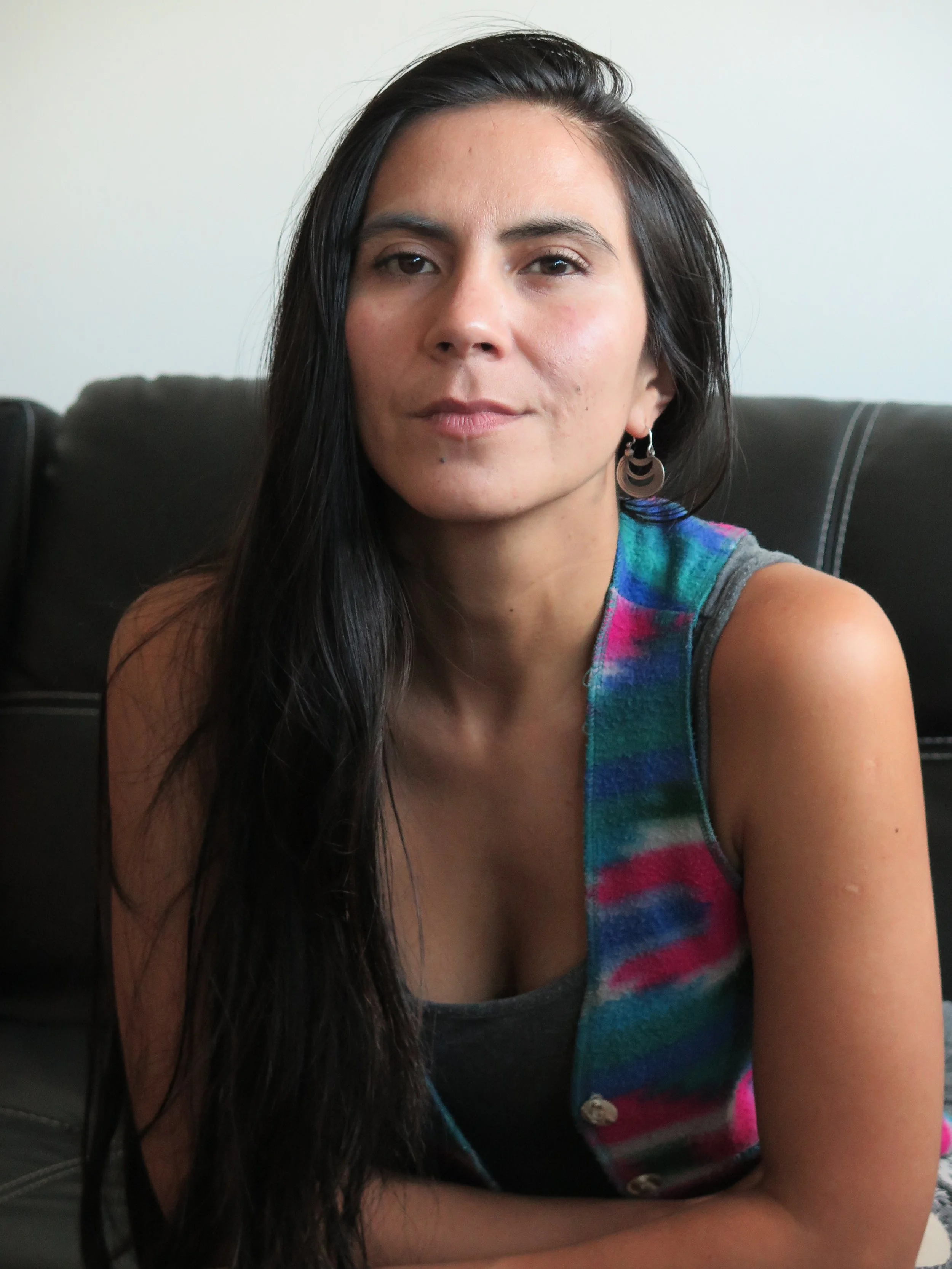
Alejandra Marin
Occupation: Interdisciplinary performing artist, director, theatre educator & facilitator.
State of residency: Victoria
Favourite place in Australia: Magnetic Island
Favourite Latin-run business in Australia: Lasnet (Latin American Solidarity Network)
Biggest surprise when arriving in Australia: The accessibility to public parks and green spaces in Melbourne.
Photo by Jared Roman.
Story edited by Lucy Coulson. Digital edition by Phoebe McKenzie and Cristy Abela
Alejandra was born in Coquimbo, Chile, and later moved to Santiago, where she studied acting and theatre direction before migrating to Australia. She also considers herself an educator, having always felt a natural connection to teaching. Over the years, she has developed and facilitated courses and workshops in theatre, movement and somatic practices.
Now based in Naarm/Melbourne, Alejandra has been running theatre workshops in Spanish since 2018. She is involved in several collaborative groups and artistic projects, including Roots & Trace Ensemble and Tunjos y Cántaros Ethnologic Dance Company, working alongside artists from diverse traditions and backgrounds. She is also an active member of Colectiva Abya Yala, a collective of Latin American migrant women exploring ecofeminist perspectives and embracing their mestiza identities. In addition, she collaborates with musical band Lavandita as its stage director and one of its dancers.
Her collaborative projects have received grant support from Australian organisations including Creative Australia and Merri-bek City Council, as well as IBEROESCENA, an Ibero-American cultural funding programme. In 2009, she received an Honourable Mention for Best Direction at the 10th University of Chile Theatre Directing Festival. This recognition led her to pursue a Master of Theatre (Directing) at Universidad de Chile, also supported by FONDART, Chile’s National Fund for the Development of Culture and the Arts.
More recently, Alejandra co-created and performed in Short Stories About Latin Women, presented at the 2026 Melbourne Fringe Festival to a warm audience reception. She is currently undertaking a creative residency in Lorne with Roots & Trace Ensemble. The residency outcome will be presented in November, followed by a premiere at La Mama theatre in December. You can follow @rootsandtrace for updates.
Outside her artistic practice, Alejandra is vegan and passionate about travelling. Exploring different cultures, landscapes and ways of living has profoundly shaped her perspective and continues to inspire her creative journey.
For Alejandra, contributing to her community and to Australia more broadly is about creating opportunities for people to connect, share experiences and feel a sense of belonging.
Through her theatre workshops, she has watched students build meaningful relationships while exploring their bodies, voices and creativity. Some had not experienced this kind of connection with other Spanish-speaking migrants in years. Seeing them rediscover that sense of community and find a safe space to express themselves in a foreign country has been one of the most rewarding aspects of her work.
The same spirit underpins Colectiva Abya Yala's community initiatives. Through readings, workshops and larger gatherings featuring cultural music and food, the collective brings people together while raising the visibility of migrant women's experiences, particularly those of the Latin American diaspora. It creates opportunities to celebrate mestiza identities and explore different ways of relating to the land and to one another.
Theatre production is another significant part of Alejandra's practice. While bringing a production to life can be demanding, the most rewarding moments come from hearing how audiences connect with the stories being told. Newly arrived migrants have shared how the work gives them hope by reminding them they are not alone in their struggles. Others, who migrated 40 or 50 years ago, have spoken about how seeing theatre in Spanish again reconnects them with their origins.
Alejandra sees this work as part of a broader contribution to Australia's cultural and social fabric. Migrant cultures and experiences are not separate from Australian culture; they are integral to what Australia is and continues to become. Through her artistic and community work, she hopes to create spaces where diverse cultures and stories can be shared, recognised and valued as part of Australia's collective identity.
TELL US YOUR STORY
My partner and I arrived in Australia in 2017 as tourists. We had spent a year on a Working Holiday Visa in New Zealand and wanted to keep travelling for a while. We never imagined we would build a life here together.
I found theatre early on. A friend from Chile introduced me to a Latin American theatre company in Melbourne, where I began performing. It helped me reconnect with my craft.
Not feeling done with Australia yet, we decided to extend our stay through student visas. I studied English first, and then my partner pursued further studies related to his professional skills, which also offered potential pathways to permanent residency.

Stories About Latin Women - Photo by Ximena Jimenez
The following years involved hard work. I continued struggling with the language and had to work on my perfectionism and insecurities. Gradually, I stopped focusing on what I felt I couldn't do and started focusing on what I could offer to my community. This led me to create theatre workshops in Spanish, which became spaces for friendship and connection. I also facilitated workshops for women and became involved with Colectiva Abya Yala, a community of Latin American migrant women where I reconnected with my roots and explored my mestiza identity. These experiences deepened my sense of belonging and helped Australia feel like home.
Then came COVID. Our migration process stopped, the community felt inaccessible, and we grew tired of "the visa game" and its uncertainty. We made the difficult decision to leave Australia.
We hadn't seen our families in five years. Before returning to Chile, we travelled through Europe, as I was considering a Master's degree in Spain. Life took unexpected turns, and I spent almost three years between Chile, Europe and other parts of Latin America. Eventually, Australia's borders reopened and migration pathways became accessible again, so we began working towards our return.
While still in Chile, my partner obtained his NAATI accreditation as an interpreter, allowing us to pursue a skilled migration pathway from overseas. After more English tests, an Expression of Interest, a Victorian state nomination, countless documents, saving for the application and almost two years of waiting, we finally received our permanent residency.
By then, my partner had been back in Australia for almost a year on a Working Holiday Visa while I was studying in Barcelona.
Coming back was exciting, but I also had doubts. We weren't starting from scratch: we had history here and a beautiful support network. Still, it took time to find myself here again, feel settled and build a life with more stability.
Today, we're expecting our first child and preparing for this new stage as a family of three. I continue developing as a performing artist, director and theatre teacher, collaborating with different collectives. I'm not sure how much longer we'll be in Australia, or how becoming a bigger family will shape our decisions. For now, I feel more present than ever, enjoying life and feeling deeply grateful for every decision we've made, however difficult some may have been.
CHALLENGES
Finding my voice beyond words – Learning English later in life was my first and biggest challenge, deeply affecting my confidence and ability to express myself. I often struggled to connect with people in my field. Over time, I discovered other ways to communicate and create beyond language. I also became more confident in my English, learning to let go of perfectionism and embrace mistakes with more kindness. It’s still a work in progress.
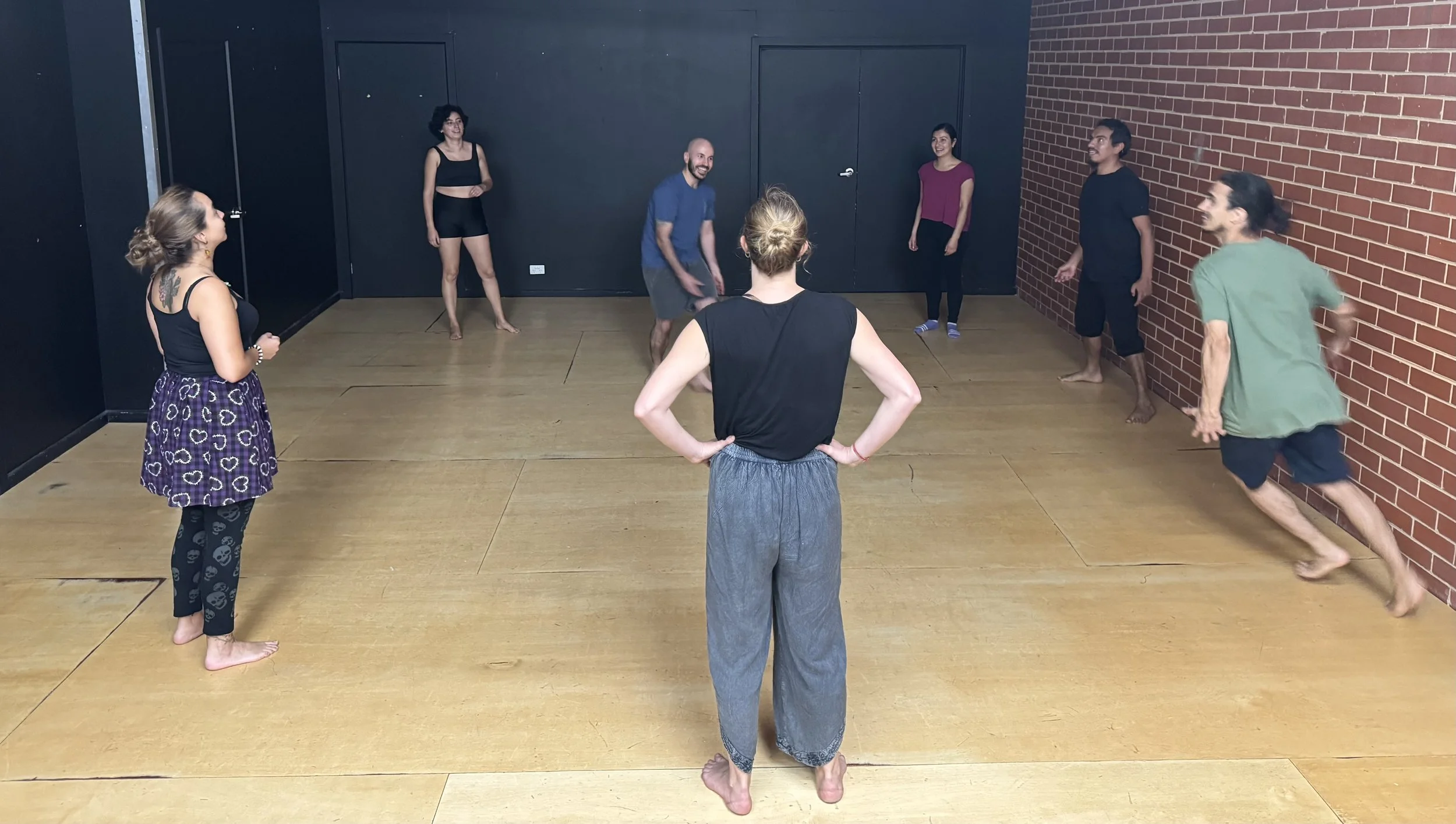
Theatre Class in Spanish 2026
Re-rooting and finding new ground – Arriving in Australia with an artistic career built in Chile meant starting over. I had to navigate a different arts industry, build networks and find opportunities. I still balance jobs outside my field with my artistic practice, but through collaborations and independent projects, I have gradually created more space for my work. Drawing on my previous experience while adapting to a new context, I’m finding a new balance and ways to continue growing as an artist.
Belonging between worlds – Building a life away from my home country has meant navigating the contradictions of migration: missing loved ones, feeling divided between two places and never fully belonging to just one. Over time, I’ve learned that I don’t have to choose between them. Both are part of who I am, and each holds something the other cannot replace. I’m finding ways to embrace this in-between space, creating a sense of belonging through connections, shared experiences and the people who make each place feel like home.
CONTRASTS AND SIMILARITIES
The warmth of human connection – One thing I appreciate in both countries is people’s kindness and generosity. I’ve met people who offer help, hospitality and warmth without expecting anything in return. These experiences remind me that human connection goes beyond cultural differences, and that generosity and solidarity can make us feel welcome, even far from home.
Between closeness and personal boundaries – A key cultural difference lies in personal boundaries and social interactions. In Chile, relationships tend to be more spontaneous and involved; people are often closer and more present in each other’s lives, sometimes even crossing personal boundaries. In Australia, there is generally greater respect for personal space and privacy, although interactions can sometimes feel more reserved.
Making room for life – Wages and working conditions in Australia can make it easier to achieve a better work-life balance. In Chile, many people spend much of their lives working, often with less financial freedom. Here, I’ve found more room to enjoy leisure time, nature and personal pursuits. It’s something I deeply value and hope more people in Chile can experience too.

On stage for Stories About Latin Women 2026 - Photo by Ximena Jimenez
PIECE OF ADVICE
Embrace the unknown – Moving to another country requires openness, curiosity and patience. Allow yourself to experience a different culture without expecting everything to make sense straight away. Be willing to learn, make mistakes and embrace the unexpected. Sometimes the most meaningful opportunities come from places we never imagined.
Beyond the expectations – Don't compare yourself to others! Everyone's path is different, and with different timing. Recognise your strengths, trust your abilities and allow yourself to grow at your own pace. Stay curious about what is possible, and give yourself permission to redefine what a fulfilling life means to you.
Be gentle with yourself – Be patient with yourself. Migration brings unexpected challenges, and not every day will feel like progress. You’ll try things that don’t work, so stay resilient and creative. There are always new ways to reach your goals, even if they take you somewhere unexpected. Believe in yourself, trust your own process, and keep creating.
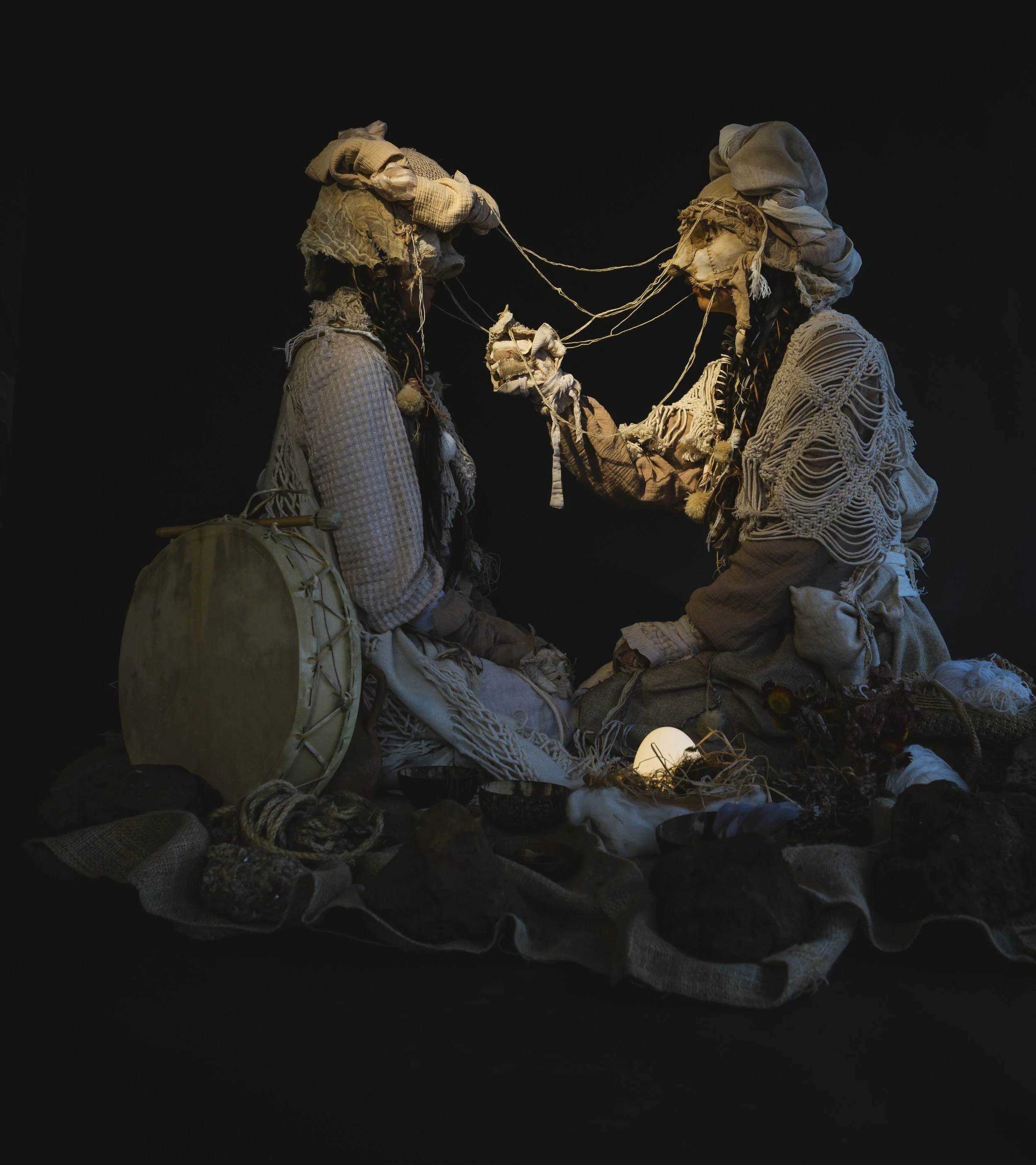
Promo for the upcoming project Knots of Becoming - Photo by Tatiana Castelo Chaves Scott
IN THE NEXT FEW YEARS
Alejandra doesn't have a fixed picture of what her life will look like in five or ten years, but one dream she hopes to pursue is helping establish a collaborative space for artists in Australia, particularly those working in the performing arts. She envisions an affordable place where migrant actors, dancers and musicians can meet, rehearse, experiment and develop their work. She also hopes to strengthen artistic connections between Australia and Latin America, creating opportunities for exchange, collaboration and shared creative projects across both regions.
Do you want to follow Alejandras’s journey?
Connect with her on Instagram & LinkedIN or directly on her website www.amodrama.com
We invite you to support the work of Latin Stories Australia with a tax deductible donation , connect with us on LinkedIn and Instagram or become part of our volunteer community. Thank you for believing in the importance of sharing stories, celebrating cultural diversity and building stronger communities,