
Manuel Saez Kifafi
“Find your people. And if you can’t find them, create the space where they can find you”.
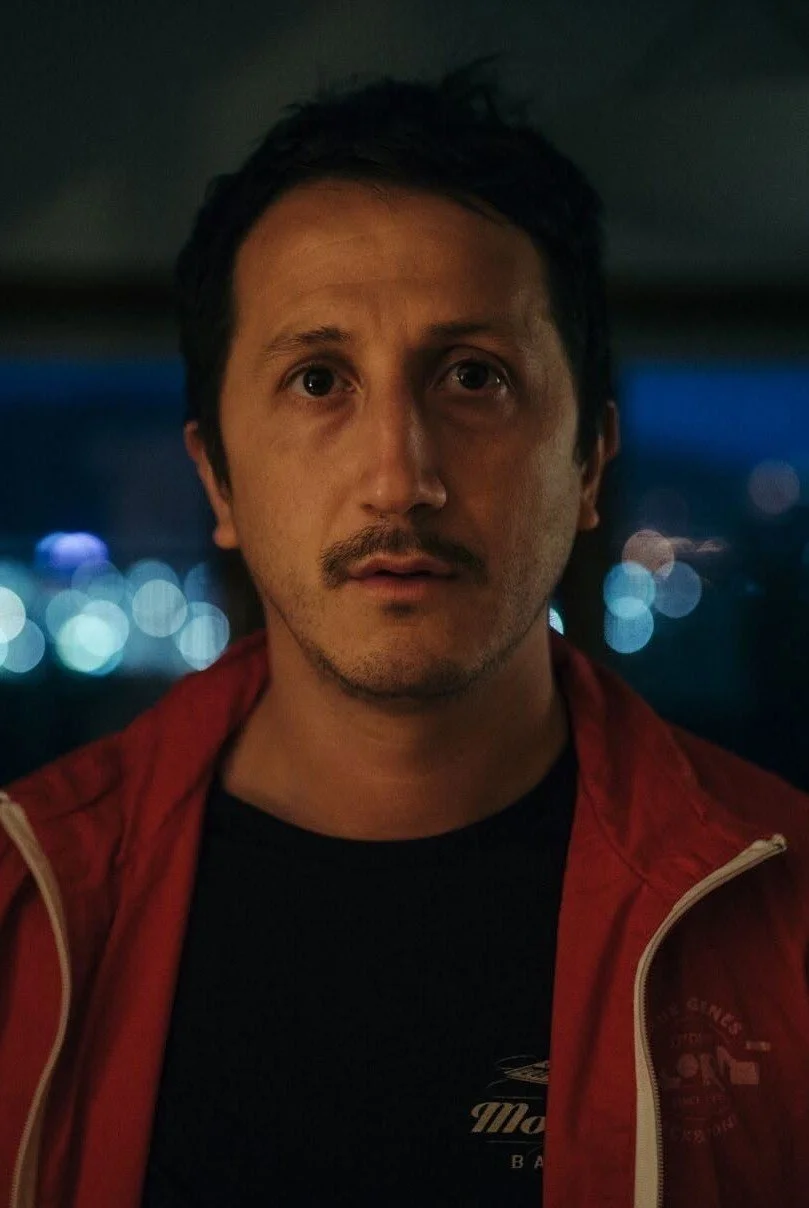
Name: Manuel Saez Kifafi
Occupation: Director, actor, playwright and theatre and film teacher, Co-Founder of Smoko Theatre.
State of residence: Victoria
Favourite place in Australia: Melbourne
Upon arrival: How much silence the Latin American community carries here, and how much it needs a space to speak.
Story edited by Lucy Coulson. Digital edition by Johany Ortiz.
Manuel is a director, actor, playwright and theatre and film teacher with more than 18 years of international experience. He was born in Chile and has Palestinian heritage on his mother’s side. He lived in New Zealand for 13 years before arriving in Melbourne.
Together with Camila Fernandez, he co-founded Smoko Theatre, the only testimonial theatre company in Melbourne created by and for migrants. Testimony as a methodology for the forensic reconstruction of identity is their signature. Nothing is separate from us if it passes through the body.
They have produced eight original works: Migrantes, Personal, Caminantes, Al Sur, Somos, Frenesí, Colmena and La Trampa. In less than two years in Melbourne, they have worked with 62 participants and reached more than 1,350 people. La Trampa, written by Manuel with passages from Pablo Neruda, was presented at Collingwood Yards with seven actors and three sold-out performances. It has been confirmed for Melbourne Fringe 2026 at Bluestone Church Arts Space in Footscray, in partnership with Maribyrnong City Council.
MY STORY
I arrived in Australia in 2024 with a suitcase, a paintbrush and a methodology. I am the son of a Chilean mother who held an important position within the telephone company workers’ union at a time when that came with a real price. My father searched for people who had disappeared through the invisible infrastructure of the Vicariate of Solidarity during Pinochet’s dictatorship. On my mother’s side, I inherited Palestinian heritage. It was a history that came to me in fragments — photographs, pieces of something that happened before me and was never fully told. I grew up in a home that held love and horror at the same time. That gave me awareness. Always quietly.
I emigrated. First to New Zealand, where I lived for 13 years. I learned English, built a career as a painter, and founded Smoko Theatre in Wellington in 2016. Racism didn’t arrive all at once. It accumulated. At the supermarket, at work, in the silences that hurt more than words. Until one day a construction foreman laughed at me in front of everyone. That wasn’t the beginning. It was the accumulation finally overflowing. My response wasn’t to disappear. It was to keep writing.
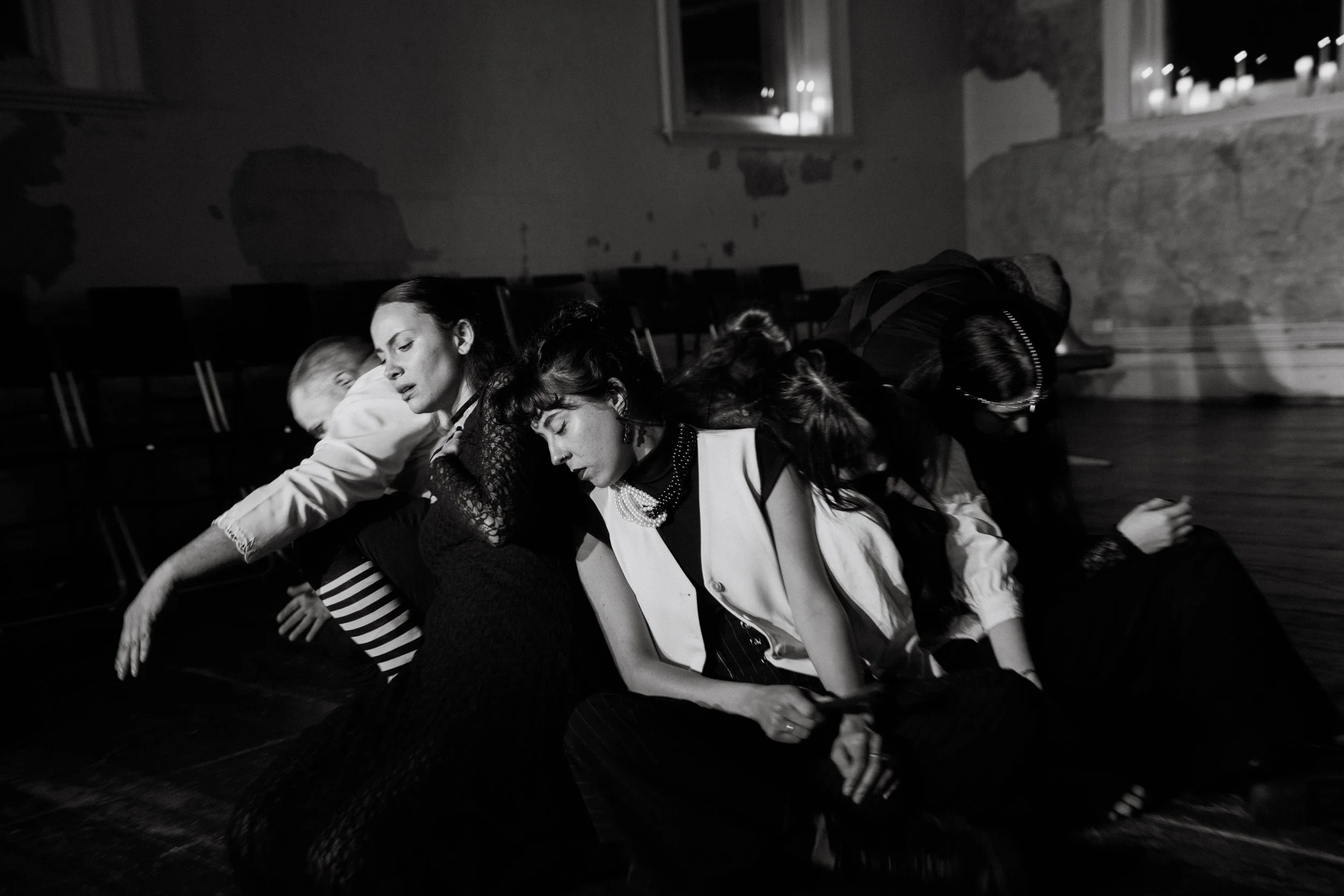
Practice performance at Smoko
In Auckland, while working with Latin American migrants, the methodology took its definitive form. I called it Scenic Forensic Methodology: testimony as a forensic reconstruction of identity. The first production was Migrantes. Then came the first students — people who had never set foot on a stage and suddenly had one of their own.
When I arrived in Melbourne in 2024, I had no contacts, no funding and no venue. But I had work to do. I painted houses during the day and wrote scripts at night. Together with Camila Fernandez, co-director and visual artist, we built each production without institutional support. That’s how we arrived at La Trampa, a play written by me with passages from Pablo Neruda, featuring seven Latin American migrant actors. Three performances. All sold out.
Smoko has its home at Collingwood Yards, a historic precinct in the heart of Melbourne with more than 170 years of public use. It isn’t simply a hired venue. It is a place with its own memory, where layers of the city’s history settle one on top of another, just as testimonies accumulate on stage.
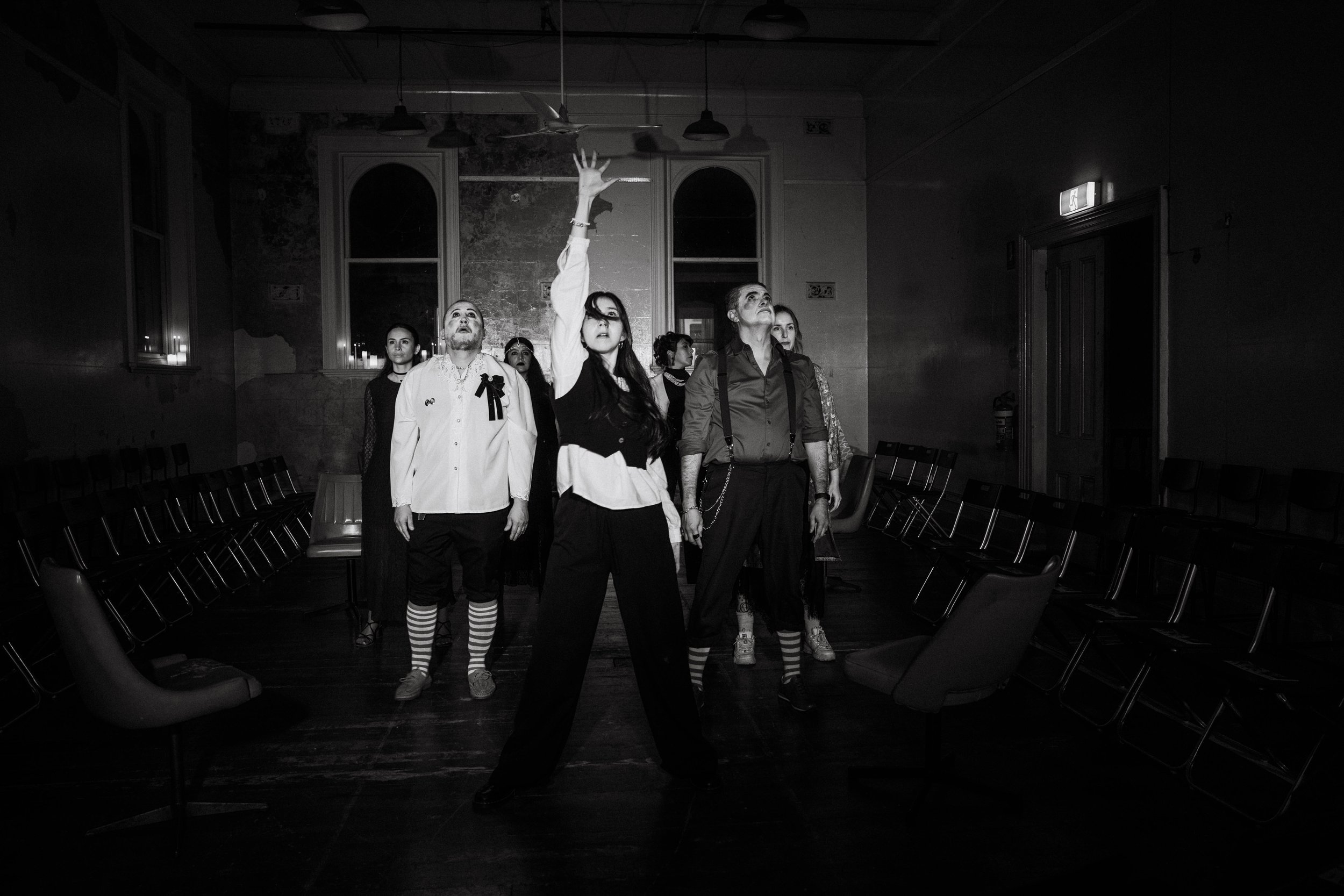
In performance!
What surprised me most about Melbourne wasn’t how different it was from Chile or New Zealand. It was how similar the experience of migration feels across all languages. Smoko works in that space: between the light that left and the light that arrived. Between what happened and what the body is only now beginning to process.
CHALLENGES
Migrant memory has no stage – Strictly speaking, no one is recording or documenting the migrant memory of this generation in Australia. That absence was the first major challenge: there was no model, no space and no theatrical language for it. I had to build it from scratch, with the bodies available to me and the stories that no one else was putting on stage.
Making memory enter through the body, not the mind – The greatest methodological obstacle wasn’t getting people to tell their stories. It was allowing those stories to pass through the body before reaching the stage. The Scenic Forensic Methodology works precisely on this: the forensic reconstruction of identity not as an intellectual exercise, but as a physical act. That requires time, trust and a room where mistakes have no consequences.
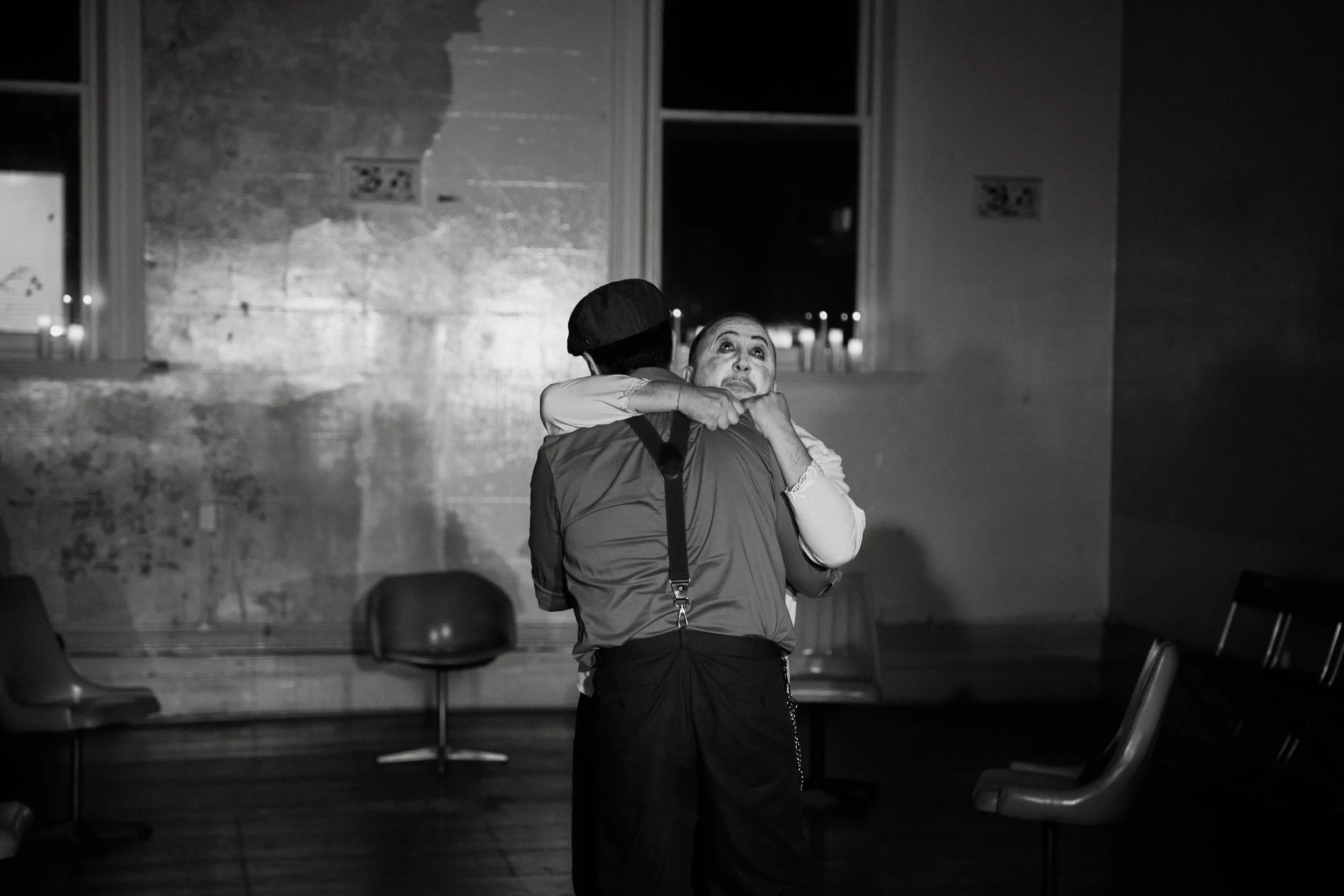
Sustaining memory without resources – Every Smoko production has been funded through painting work. Migrant memory deserves institutional resources. That is the challenge now: for work that has already proven itself to receive the support it needs to grow without depending on a paintbrush in the other hand.
CONTRASTS AND SIMILARITIES
Public space as political territory – In Chile, public space is contested, used and debated. In Australia, it is managed with greater order. Melbourne is an exception. Footscray, where Smoko performs, has the energy of a Latin American neighbourhood: people out on the streets, languages mixing, history visible on the facades.
Migration as an invisible founding story – Australia is a country built by migrants, yet the voices of today’s migrants rarely appear on the stages or in the institutions that tell that story. That gap is exactly where Smoko exists. We don’t represent the migrant community. We are the migrant community.
Closeness and isolation – Latin American culture is built around closeness. Migration takes that away from you. What I found in Melbourne is that this longing for community is universal. Every migrant, no matter where they come from, is looking for the same thing: a place to belong. Testimonial theatre is that place.
PIECE OF ADVICE
For someone thinking about moving to Australia – Come with a skill, patience and curiosity. Australia rewards people who show up and do the work. But give yourself time. The country takes time to reveal itself. And so do we.
To inspire someone to succeed – Don’t wait for permission. Institutions come later, but only after you have built something worth supporting. Start with what you have, in whatever room will have you, and do it as well as you can. The rest follows.
For someone who is struggling – You are not alone, even when it feels that way. The isolation of the first few years is real, but it isn’t permanent. Find your people. And if you can’t find them, create the space where they can find you. That’s what theatre taught me.
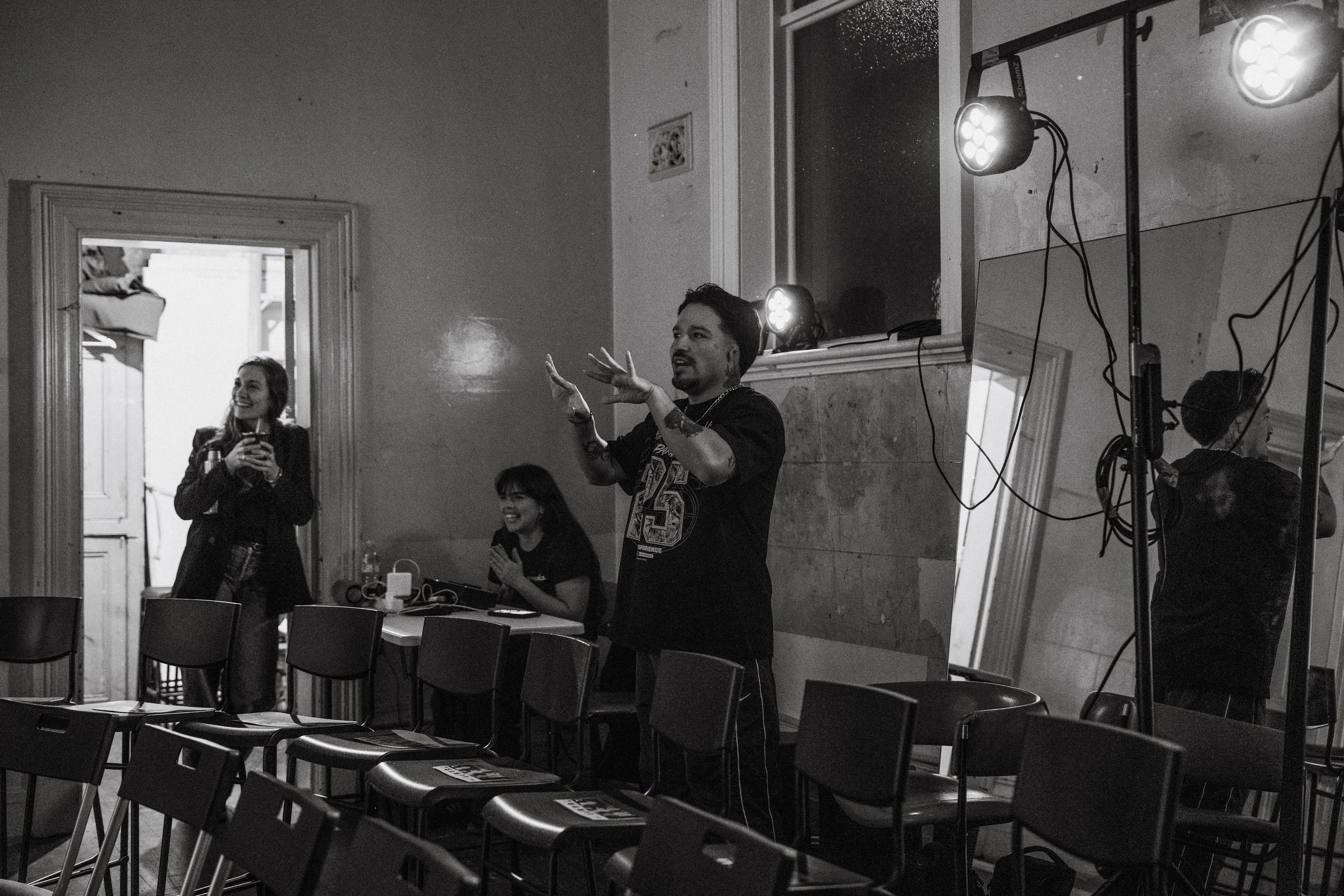
Manuel bringing his art to life.
IN THE NEXT FEW YEARS
Manuel sees Smoko Theatre becoming a permanent presence in Melbourne’s cultural landscape, with national and international tours. La Trampa will travel, and new works are already taking shape. He wants to build a training program for migrant facilitators so that the methodology can grow beyond him. He also hopes to dedicate himself to this work full-time: no longer dividing his days between a paintbrush and a script, but bringing both into the one place where they make sense together — the stage.
Do you want to follow Manuel’s journey? Connect with him on Instagram, LinkedIn.
We invite you to you to take a moment to reflect after reading this inspiring story and invite you to support our work for the community with a tax deductible donation , following us on LinkedIn and Instagram or join the Latin Stories Australia volunteer group.
With love and gratitude - The Latin Stories Australia team