Trini Abascal
I have learned to accept that part of me and my memories belong to Mexico and another part of me belongs here
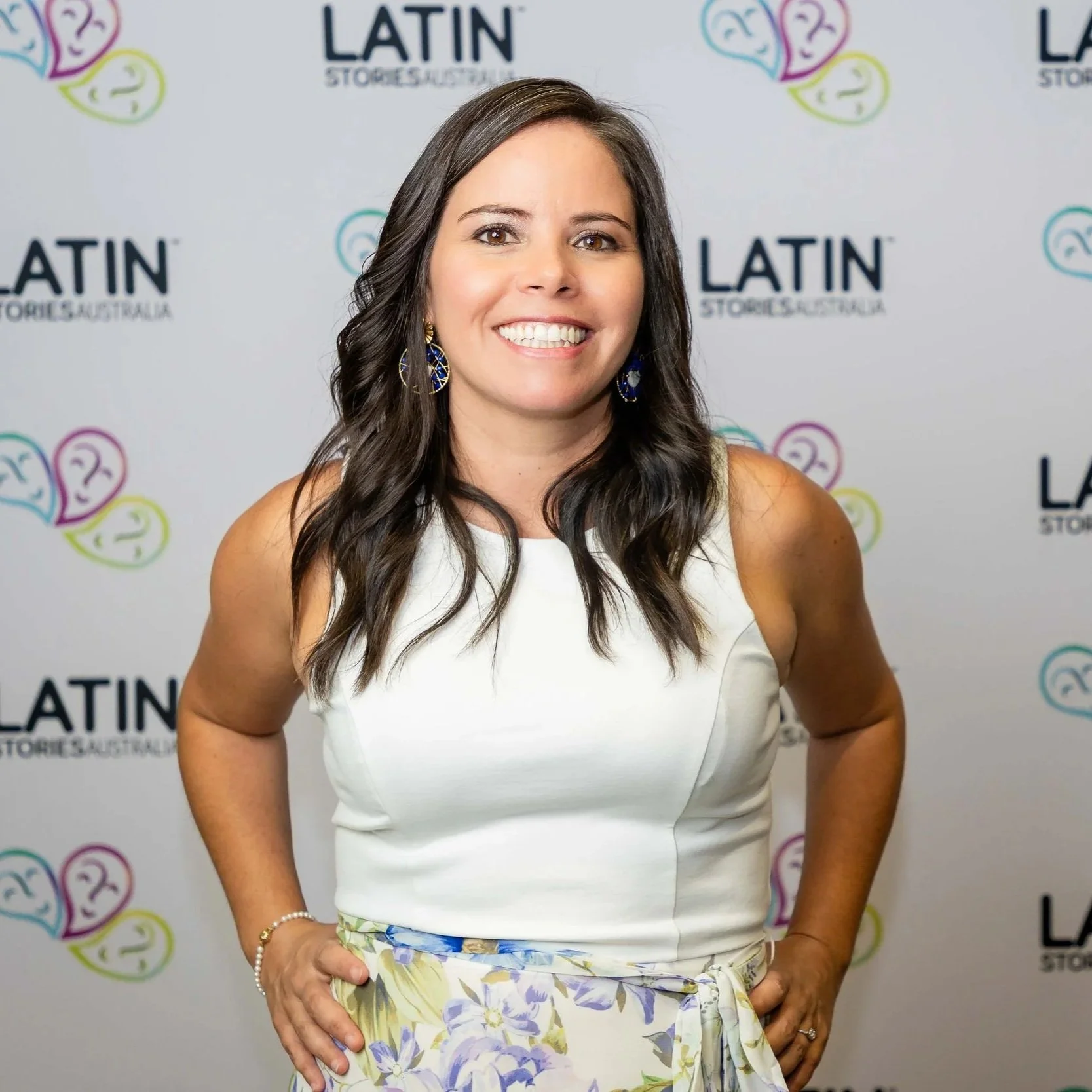
Trini Abascal
Occupation: Director at Latin Stories Australia & Evidence and Impact Advisor at Beyond Blue
State of Residency: Victoria
Favourite place in Australia: The Grampians (Gariwerd) in Victoria and Mataranka in the NT
Upon arrival: Surprised by the natural beauty and impresive landscapes
Story edited by Monica Espinosa
Trini Abascal is a researcher, evaluator, author, and community advocate who is passionate about helping people feel seen, connected, and supported. As co‑founder of Latin Stories Australia, Trini has helped build one of the most influential platforms for Latin American storytelling and community connection in Australia. Through her leadership in projects such as La Sobremesa, Nuestras Voces, and Finding Your Place in Australia (integrandonos en Australia), Trini has supported countless migrants and helped the organisation gain recognition across community, government, and philanthropy. Her work has contributed to Latin Stories Australia receiving both local and international awards. Her multidisciplinary experience blends evidence, creativity, and lived experience to advance social justice and build more inclusive communities. She currently works at Beyond Blue as an Evidence and Impact Advisor, where she applies her evaluation and research skills to support mental health prevention and early intervention across Australia. At the heart of everything she does is a simple belief: when people get opportunities, feel understood and connected, they thrive.
Tell us your story
My decision to first come to Australia was motivated by a need for a change in my life. At the time, I was living in Monterrey (a city in the north of Mexico). I moved there when I was 18 years old to study a Bachelor in Accountancy and Finance – but coming from Oaxaca – a much smaller and very cultural city in the south of Mexico – I never found my place or felt like I belonged; the city life was very different to what how I was raised. So, when I finished my Masters in Quality and Productivity at Monterrey Tech, I decided I needed to move. Finding a course to improve my English was a good rational excuse to leave. I initially wanted to go to Canada, but since there are education agencies helping you with all the paperwork to go to Australia, I decided that was a better option.
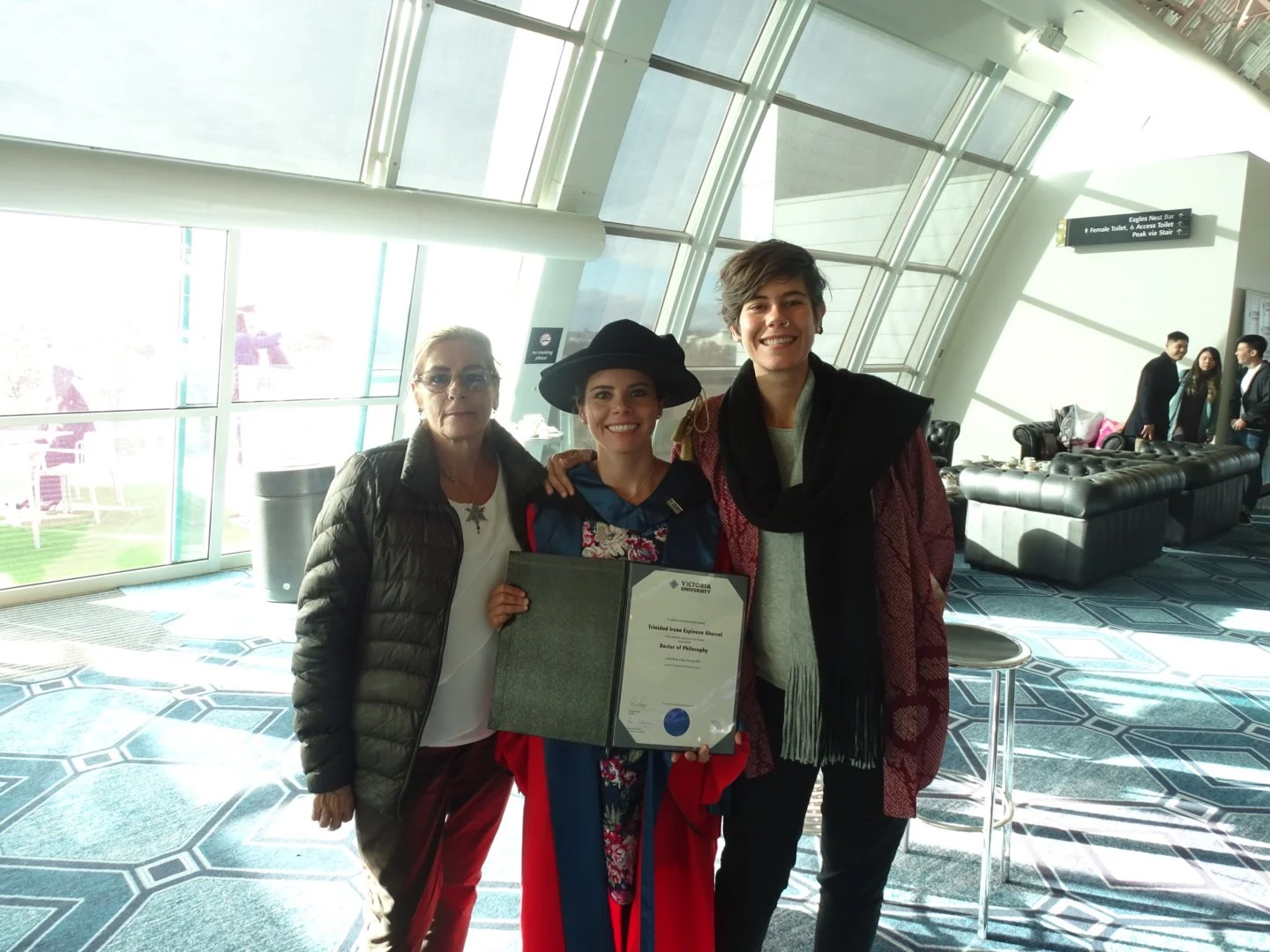
Trini finishing her PhD with her mum and her sister Maria
I landed in Melbourne January 25, 2009 to do a six-month Graduate Certificate course in Marketing – not because I wanted to, but because the school changed my course at the last minute and I already had my trip booked. Since I arrived in Melbourne, I LOVED IT! I felt this was my place. I found what I never found in my beloved city and country: green parks in every suburb, the possibility of being whoever you wanted to be, and most important a country more aligned with my values - one that promotes fairness and equality, has less marked social classes, less corruption and more respect for the law, where everyone has an opportunity to improve and encouraged to write their own story.
Unfortunately, my visa was for only six months, and at the time, I didn’t have the points to apply for Permanent Residency (PR). So, I went back to Mexico – and back to Monterrey, since my previous manager offered me a job, I couldn’t say no to. However, my dream was to come back to Australia, so after almost 3 years, too many tears and frustrations I managed to come back in 2012 to study a Masters by Research on Indigenous tourism at Victoria University with a scholarship from the Australian Government – I never thought of doing research, but it was a good plan to fulfill my dream – afterwards, I continued my research into a PhD and with those studies I was able to get the PR followed by citizenship. For my research I was awarded the Vice-Chancellor Award for Excellence and Research Training (2018) and I am also the author of various publications on international peer-reviewed journals and book chapters.
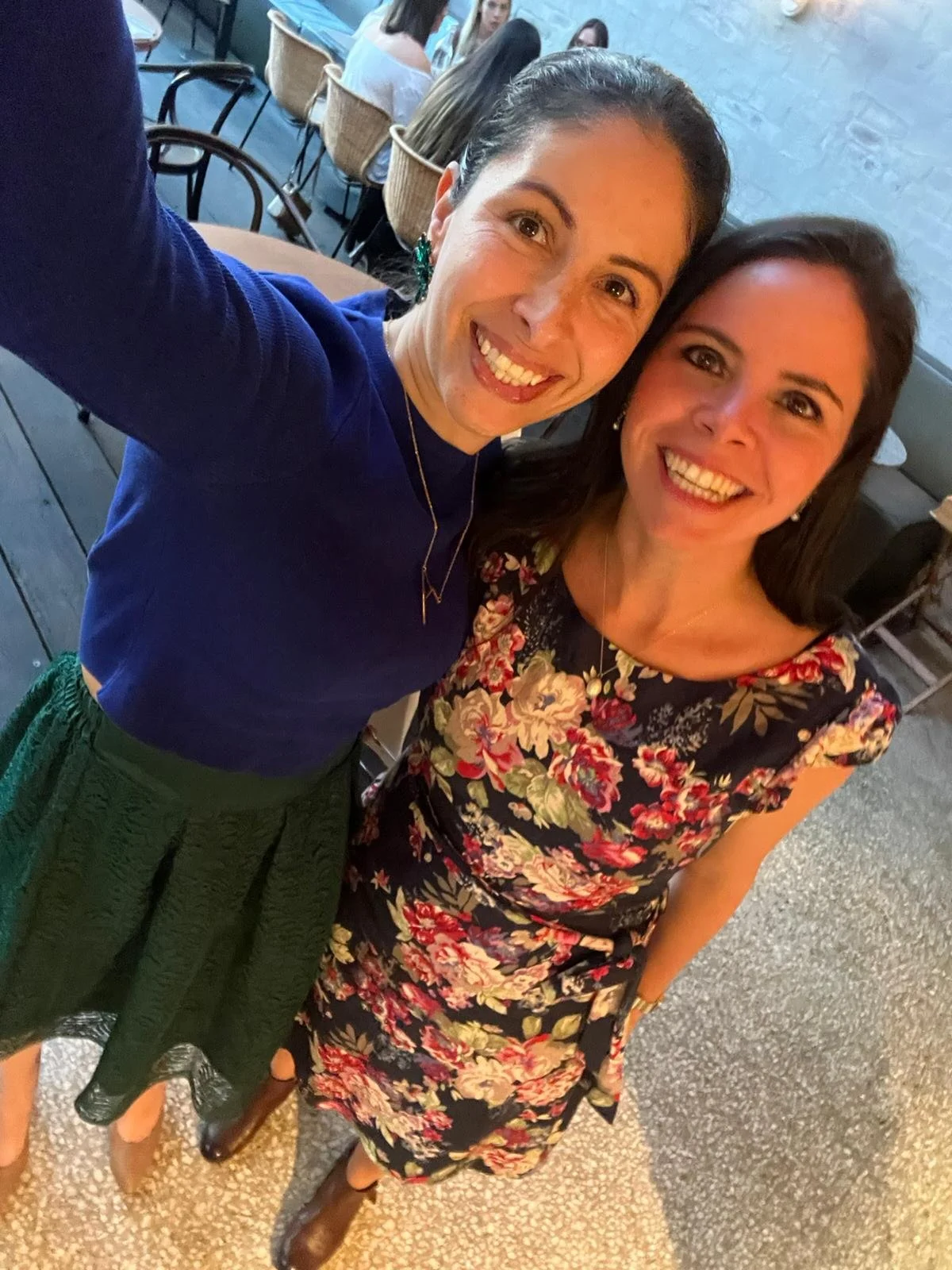
Cristy & Trini
While I was doing my Masters, I was lucky to have a scholarship that allowed me to not worry about my next tuition and basic expenses. However, I started working all types of jobs: from selling fruits and veggies at the Vic Market at $8 per hour (I know, full exploitation) to working in a deli sandwich place learning the art of coffee making (never excelled). I also had a data entry position at Victoria University, as well as tutoring, lecturing and doing research assistant work at several universities. While academia looked like my natural professional path, I was not enjoying it; I felt I needed to see a positive impact from my work, so I started to apply for other types of jobs. I got a data analyst role in a social consulting firm “Lirata” (unfortunately doesn’t exist anymore) and the team were the most social-oriented / inclusive people I had ever worked with. Through that experience I found what paved the way for my passion – using my skills and very diverse knowledge for causes that are aligned to my values. I continued growing my social evaluation experience on a fantastic organisation called Family Life supporting vulnerable communities. Today, I am very proud to know that through my evaluation and research skills, I am contributing to one of the leading organisations on Mental Health in Australia – Beyond Blue.
At the end of my Masters, Cristy Abela – a friend who I met since I was 15 – told me she wanted to start a blog about Mexicans in Melbourne, and I thought, yes why not? – At that time, I didn’t know much about blogs, storytelling, creating websites and beyond, but I’ve always had a “yes” attitude to new projects. After some brainstorming, Latin Stories Australia was born, we published our first story in January 2015. Over time, we have evolved and grown to become an organisation developing programs and projects that support, empower and connect the community.
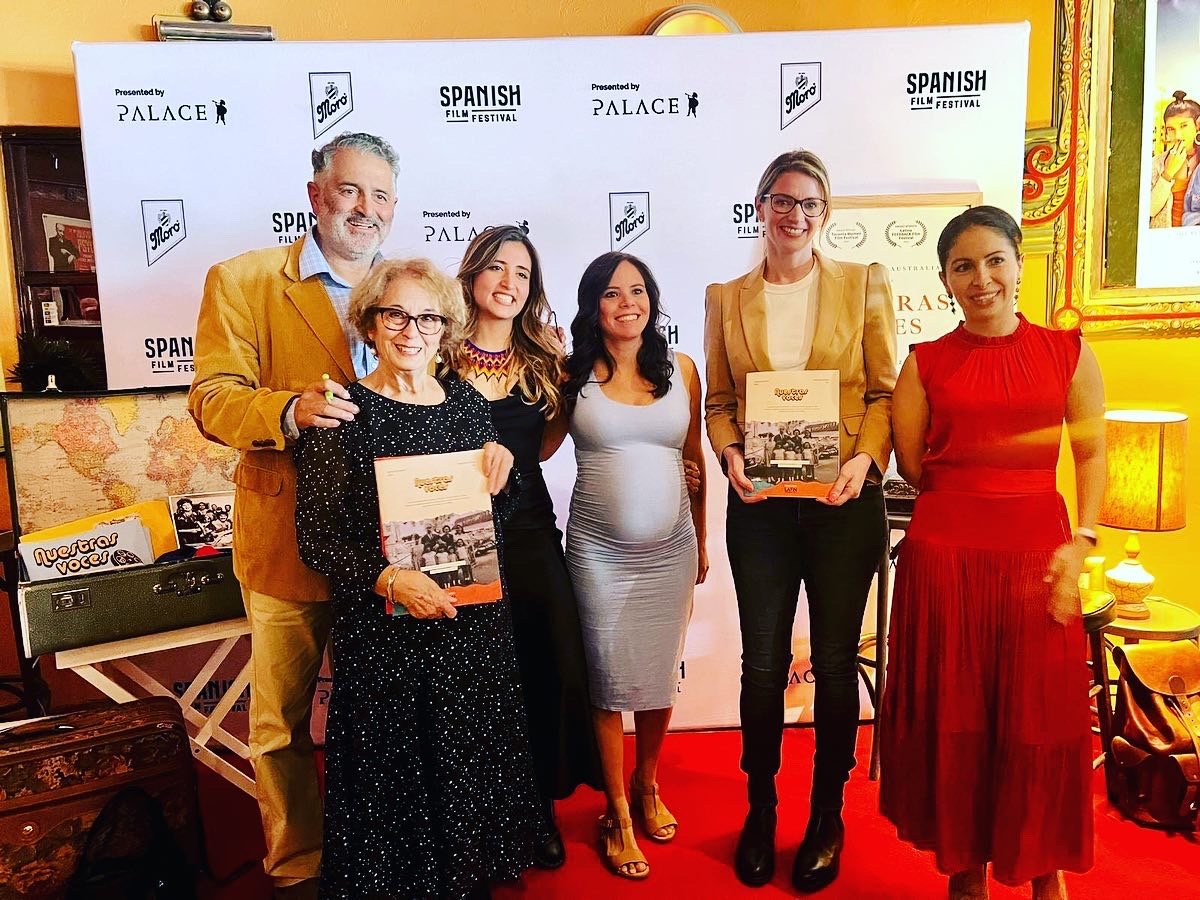
At the Astor Theatre at opening screening of “Nuestras Voces” (2022)
Latin Stories Australia has given me the opportunity to be creative with the projects we develop and at the same time use the skills I have learned through my diverse experience. La Sobremesa is one of the best examples: I was able to develop (alongside my sister) board-games that create a positive impact on gender equity and healthy relationships. I also had the privilege to interview, analyse and report on the stories for our documentary film Nuestras Voces; and to develop engaging workshops using evidence-based models that support inclusion and belonging – Finding your place/Integrandonos en Australia. I have been very fortunate to be able to listen, and learn from so many interesting stories and discussions while facilitating around 100 workshops. Most importantly, via Latin Stories Australia, we have been able to connect with, and support many Latin Americans; and advance social causes. Personally, Latin Stories has given me so much more than a purpose, it has given me the opportunity to meet amazing people through our projects and create a supportive community with our volunteers who have been part of our 10 years journey.
On a personal level, it has also been a journey and a story of its own; I met my partner Callum nine years ago and together we have two kids (Ollie who is three and Liam who is 3 months) and a dog (Pancho). We love spending time as a family and watching our kids grow. My hope for them is that, in the future, they feel both proud Australian and Mexican (at least now, tacos, guacamole and totopos – corn chips - are some of Ollie’s favourite (and limited) foods).
Challenges
Migration grief – Since I arrived in 2009 I felt Melbourne was my place, however, many times during all these years I have felt that I don’t fully belong here, but I also feel I couldn’t go back to Mexico; and even if I did, it wouldn’t be the one I remember – friends, family and places have changed as well. I think migration grief is part of being a migrant – we all experience it at some stage, and it can come and go at any time. I have learned to accept that a part of my personality and my memories only belong to Mexico and that another part of me and my experiences only belong here in Australia – and only those who have experienced it, are able to understand it.
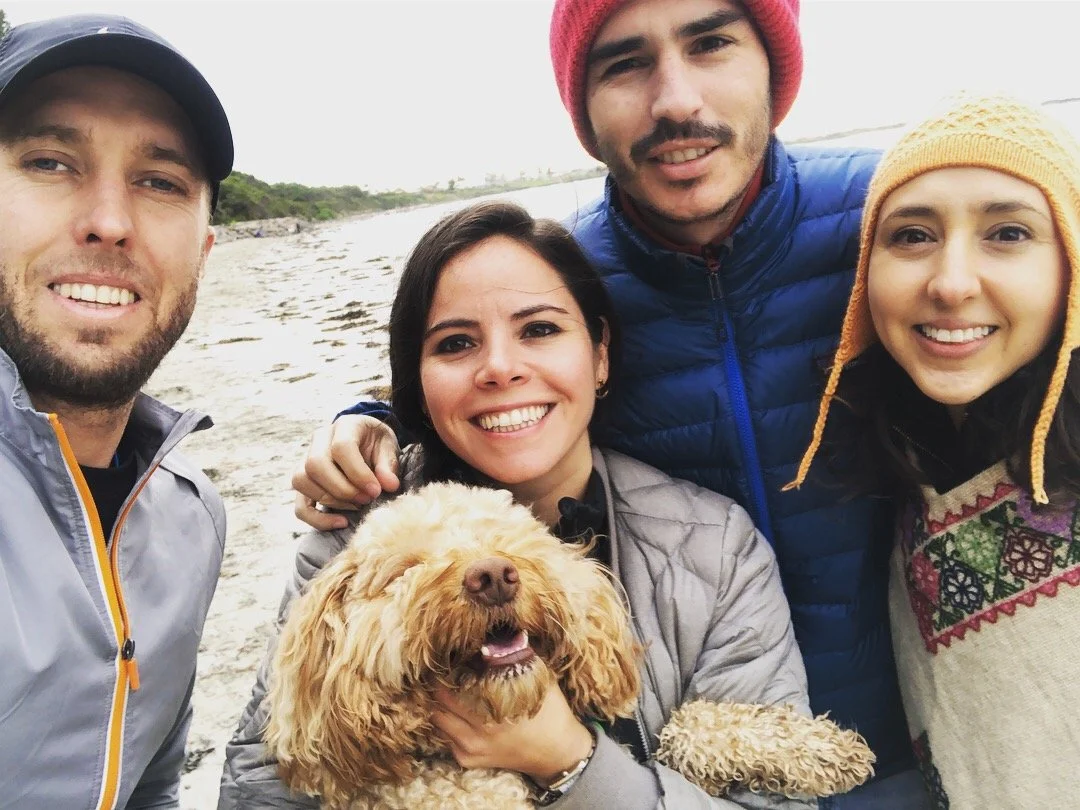
Trini with Callum, Pancho, Yasset and Pame
Friendships – In Mexico I was used to catching up with friends on a daily or weekly basis. Here, the distances, the commitments, and the different stages of our lives, make it very difficult. I still struggle with this concept as I believe that friendships get stronger by sharing moments and creating memories together. In saying that, I’ve been lucky enough to get to know, and have the support of amazing people during my journey, starting from day 1 as Cristy was already here when I arrived - she immediately became my chosen family. I have also been very fortunate to get to know great friends during my 14 years here – some of them I met since I came in 2009. I even had the privilege of having my cousin and his wife (Yasset and Pame) for four years, sharing all kinds of experiences. With time, some friends have become the loving aunties to my kids and a great support to me – and I cannot be more grateful to them – thank you Ana, Sam, Christina B., Tamara, Naty, Fatima, Monica, Diana, Sophie and Emma! On the other side of the world, thank you to my mum, my sister Maria, Yasset and Pame, and my longest friend Caro for always being there for me despite the distance.
Studies vs Professional career – While I don’t regret it at all, doing my Masters and then my PhD meant I lost 5 years of professional career. During those years, all my friends and people around me were building their careers. I remember questioning if I had made the right decision as I was still living like a student at 35. With time, I understood that everyone has their own journey and I am very happy with mine. Coming from a place where having a “very good job” is very important, I realised that, for me, it is not about the “job title” but the “job impact”. I prefer to have a job that makes me happy and where I feel I am making a difference in someone’s life.
Contrasts and similarities
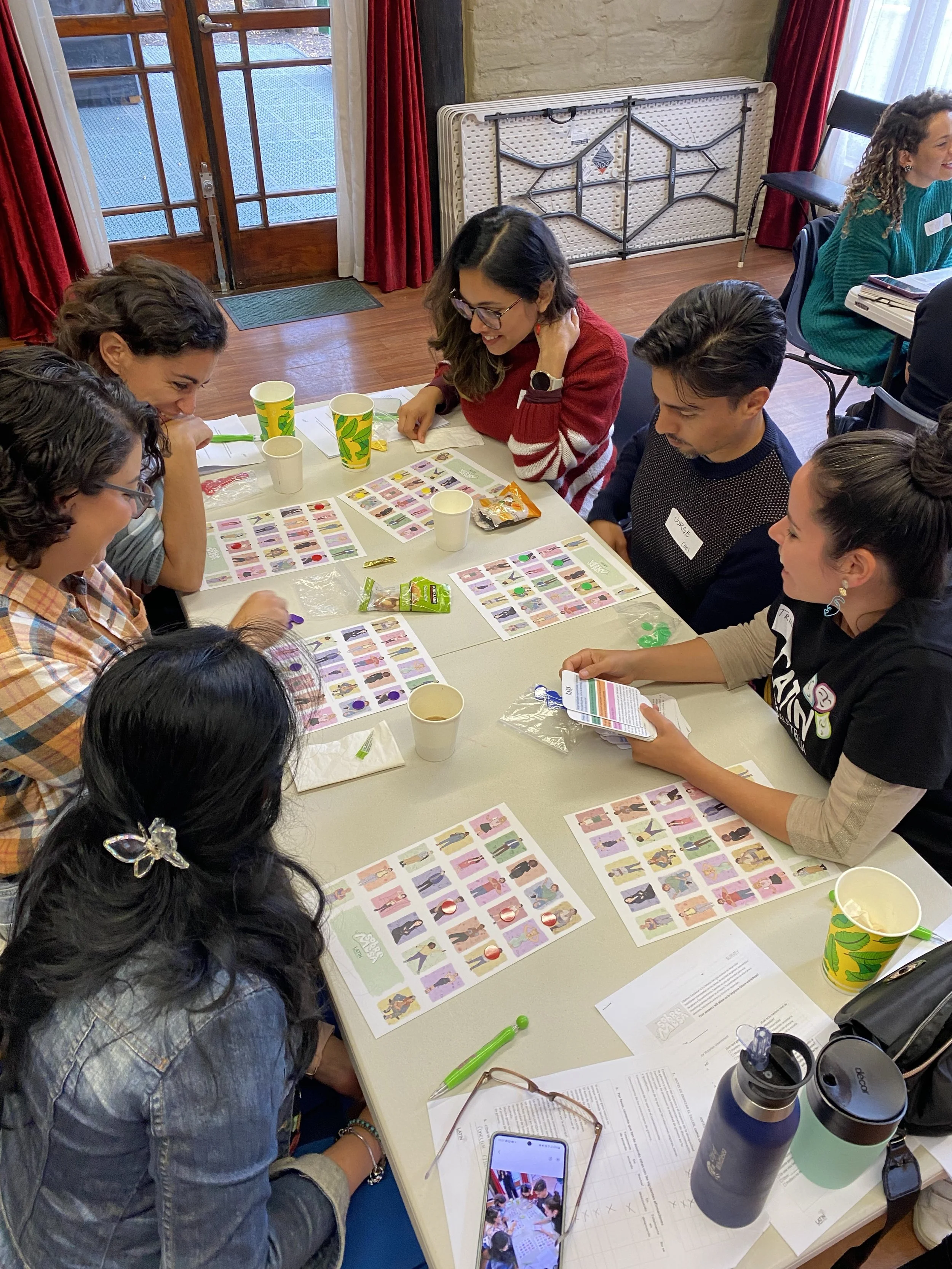
Facilitating one of La Sobremesa workshops
Juntos pero no revueltos (together but not mixed) – the way relationships are in Australia are very different to Latin America. As Latinos we are very used to being “very close” (very mixed) with family and friends. In Australia, people are more independent and do their own thing (together but not mixed). For example, when travelling, as latinos, we do “everything” together – yes it can be challenging and often someone gets annoyed, but at the same time, we all get closer with the experience – to me, it is a lot of fun! This concept also applies to the way people interact. In Australia there are more “boundaries” – people tend to be more “respectful” of others; in contrast to Latin America where families and friends (and society in general) feel more entitled to give opinions and ask questions without hesitation.
Multiculturalism – Victoria is one of the most culturally diverse places in the world. This gives us the opportunity to get to know different ways of thinking, food, values, interests, religions, etc. This has been a transformative experience that has allowed me to rethink some of my beliefs, values and privileges. It has also allowed me to break down some stereotypes we held in Mexico around certain cultures.
Opportunities – Something I really value about Australia is the opportunity it gives you to be whoever you want to be and do. Australia is a place where one can move forward, where your experience, career and hobbies can align; or if you want, you can reinvent yourself. There is this freedom of being who you really want to be, behave and dress as you wish. In Latin America this is more complicated and there are less opportunities (I remember a boy selling newspapers in a corner on our way to school – many years later when I went back home, I saw him on the same corner with the newspapers. Sadly, this demonstrates that in our countries hard work, most of the time, is not enough to progress).
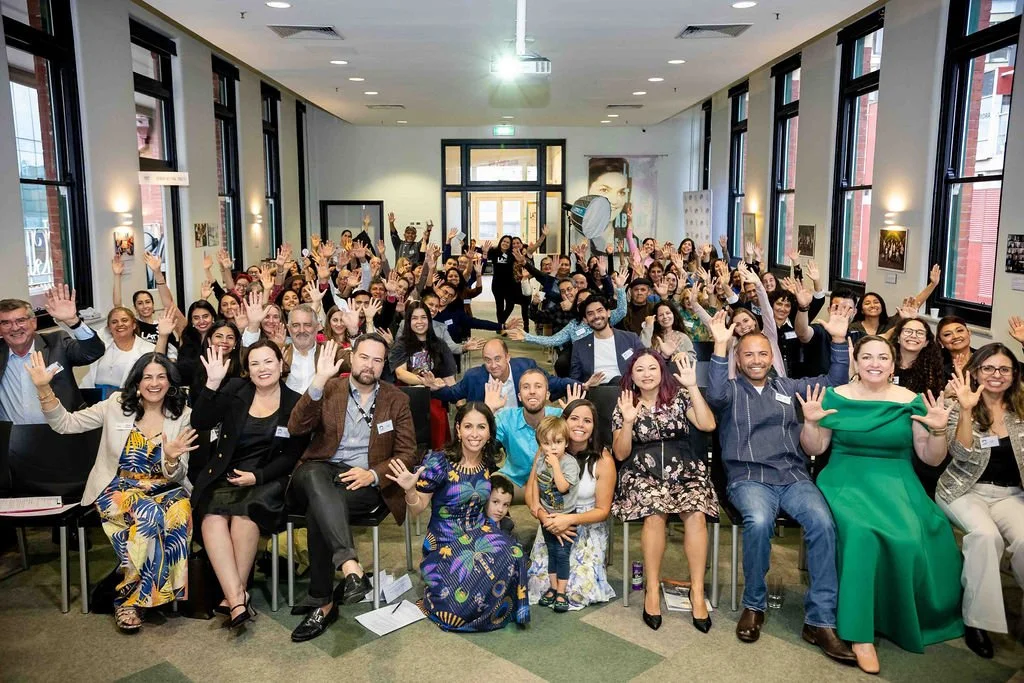
Celebrating 10 years of Latin Stories Australia next to Cristy!
Piece of advice
Say yes – the more open you are, the more opportunities you will encounter. This applies to all aspects of life (personally, socially and professionally). Our journey is not a straight line, even if some opportunities might seem outside the path to achieve your goals, I believe that everything has a way to work out.
Think about your skills – while there are limitations in terms of finding a professional job without having that “local experience” or specific experience in the field, sometimes it is about showcasing your “transferable skills”. So, think outside the box and write down what you can bring to the table. I am sure you will find you have many soft and technical skills to offer.
Be flexible – take the opportunity to embrace the learnings and the changes from your migration experience. Sometimes it questions our values and beliefs, other times it embraces our cultural background. Just remember that nothing is static, so the more flexible you are to adapt and adopt, the easier your journey will be.
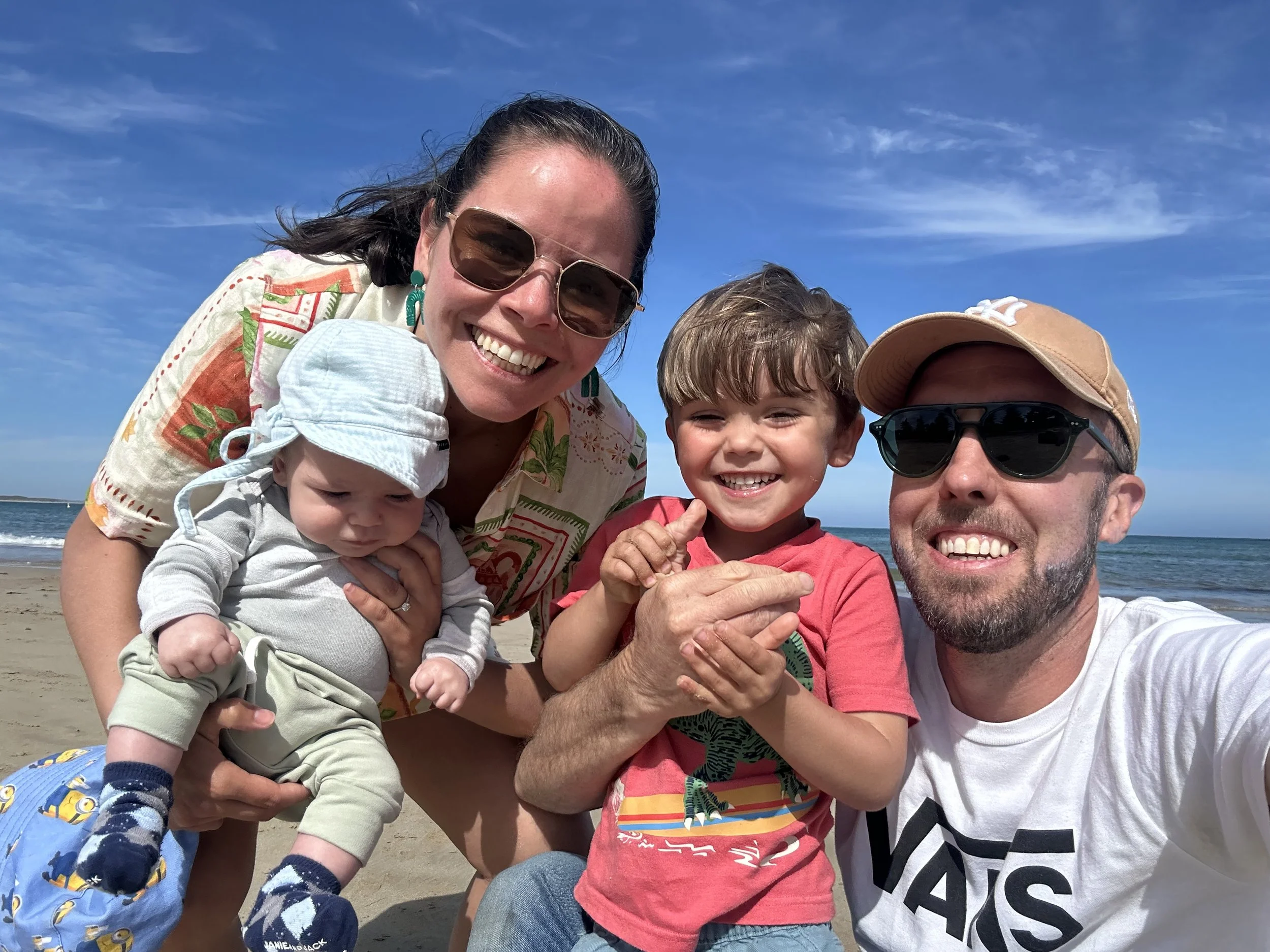
Trini with her family
In the next few years…
Trini would love to continue supporting communities through her work at Latin Stories Australia, ten more years and beyond – in particular expanding the impact of La Sobremesa and and facilitating more identity belonging projects through Finding your place in Australia workshops. She sees herself continuing at Beyond Blue and using her skills and experience to create meaningful social change. On a personal level, once her little one is a little bit older, Trini would love to go back to doing triathlons and open water swimming; and continue exploring the natural and cultural landscapes of this country she now calls home.
Do you want to follow Trini’s journey? Connect with her on LinkedIN
We invite you to you to take a moment to reflect after reading this inspiring story and invite you to support our work for the community with a tax deductible donation , following us on LinkedIn and Instagram or joining the Latin Stories Australia volunteer group.
With love and gratitude - The Latin Stories Australia team